
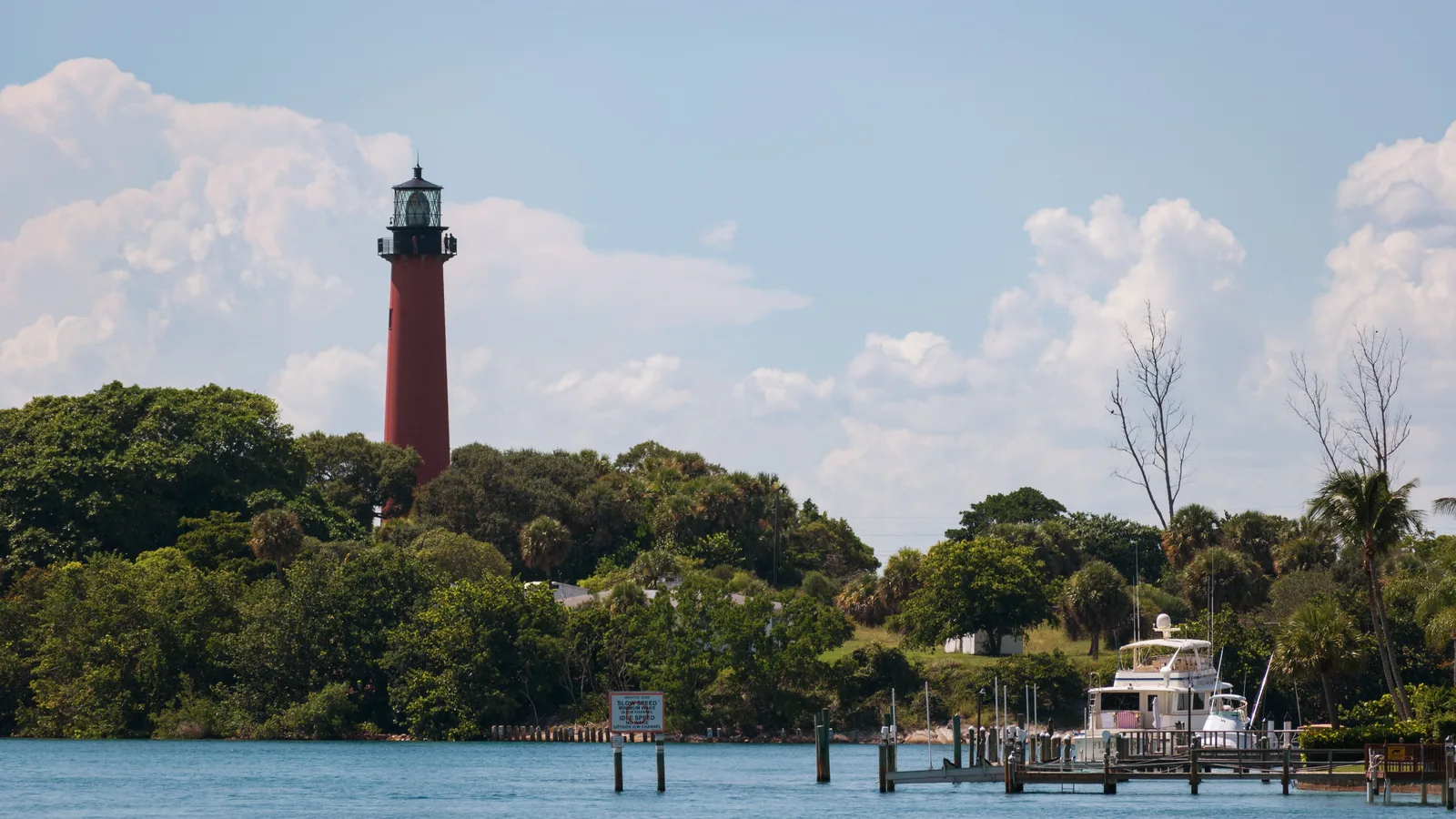
The land around Jupiter's red lighthouse has been washing away at roughly seven feet a year. A $16 million federal and state project is stopping that, and giving the public more of the waterfront in the process: a boardwalk along the Loxahatchee River, nine new beach access points, a new salt marsh and 10,000 mangroves. The Bureau of Land Management has set the grand opening for December 3, 2026.
Why the lighthouse needed saving
The Jupiter Inlet Lighthouse sits on a 120-acre federal site, the Jupiter Inlet Lighthouse Outstanding Natural Area, bordered on two sides by moving water where the Loxahatchee and Indian rivers meet the inlet. Boat wakes, tides and storms have been chewing at the shoreline for decades. Behind that shoreline sits more than a lighthouse. Congress designated the site in 2008 as the only unit of the National Conservation Lands east of the Mississippi, and the grounds hold evidence of more than 5,000 years of human life, including a prehistoric midden, plus scrub, hardwood hammock, mangrove and tidal lagoon habitats. The brick tower itself was finished in 1860 and still shines a first-order Fresnel lens made in Paris. The BLM counts more than 150,000 visitors a year and about $14.7 million a year in economic value for the county.
What is being built
Work began in early 2025, with a groundbreaking on March 24, 2025, and the BLM lists August 2026 for completion of construction ahead of the December celebration. The project stabilizes about a mile of waterfront, and the list of pieces is long:
- A public boardwalk of roughly 700 feet along the Loxahatchee River
- A terraced wall of about 800 feet with nine stairways down to the water
- Sheet pile and gravity block walls to hold the bank in place
- Limestone breakwaters and artificial reef structures just offshore
- 10,000 mangroves planted along the shoreline
- A two-acre salt marsh
- Nine new beach access points
The lighthouse at the center of it all
The project protects the setting of one of Florida's great landmarks. The 108-foot brick tower still carries a first-order Fresnel lens, one of only thirteen original first-order lenses still working in the United States, and the tower and surrounding archaeological site have been on the National Register of Historic Places since 1973. The lighthouse was fully restored in 1999 and 2000. Beyond the tower, the natural area already has a hardened trail and boardwalk through its coastal habitats, open dawn to dusk every day; dogs and bicycles are not allowed on the trails.
Who is paying for it
The $16 million comes mostly from two places: $8.3 million from the federal Great American Outdoors Act and $7 million from the Florida Inland Navigation District, with about $700,000 more from other sources. Partners include the Jupiter Inlet Lighthouse & Museum, the U.S. Coast Guard, the Village of Tequesta, Blowing Rocks Preserve and the MANG Foundation.
What it means for a Saturday in Jupiter
When the work is finished, the site becomes a different kind of outing. The boardwalk gives you inlet views without climbing the tower. Small, protected beaches open to paddlers and boaters. The new reef and breakwaters add places for fish and, in calm water, for snorkelers. And the mangroves, once they grow in, will make the shoreline greener every year rather than smaller.
During construction there have been trail detours, intermittent closures and fewer spots to beach a boat, so check before you go. The lighthouse and museum remain open.
If you go
- Jupiter Inlet Lighthouse & Museum, 500 Captain Armour's Way, Jupiter, FL 33469
- Hours: admission Tuesday to Sunday 10 a.m. to 4 p.m.; gift shop until 5 p.m.
- Climbing the tower: children must be at least 48 inches tall
- Sunset tours and kids' programs: see the calendar at jupiterlighthouse.org
- Project updates: BLM shoreline stabilization page
- Grand opening: Thursday, December 3, 2026
Put December 3 on the calendar, then plan a winter morning on the new boardwalk with a coffee and a view of the inlet.
Loading comments…