
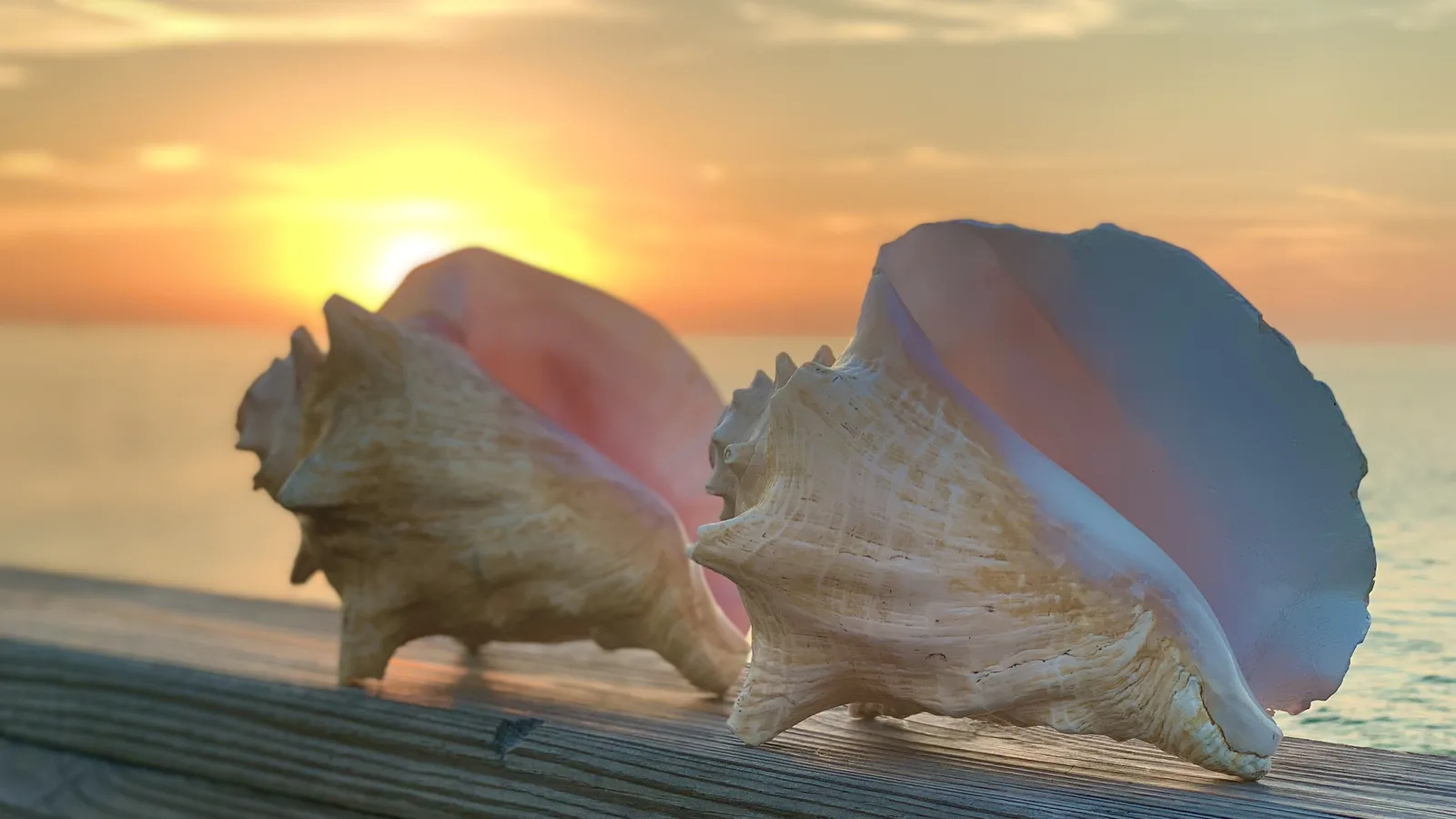
A path of crushed conch shells now runs through a gallery at the Pérez Art Museum Miami on Biscayne Boulevard. It leads past tall sculptures that look like woven palm leaves but are made of fired clay, and past bottle trees, in Anina Major: The Sacred Mangrove, a new installation by the Nassau-born artist that is on view now in downtown Miami. On Thursday, Oct. 15, Major herself comes to PAMM for a public talk the museum is billing as the evening that opens the show, on a night when admission is free after 5 p.m.
A first for the artist, on Miami's waterfront
PAMM describes The Sacred Mangrove as Major's first solo presentation at a major, internationally recognized institution, according to the museum's 2026 exhibition announcement. That is a meaningful step for an artist born in Nassau in 1981 who now lives in New York and works across ceramics, sculpture and installation. It is also a fitting place for it: Miami is a short flight from Nassau, and few American cities share as much history with the Bahamas.
The show is organized by PAMM curator Jennifer Inacio and runs through Aug. 1, 2027, so there is no rush to see it. But the opening week is when you get the artist in the room.
Clay that behaves like a palm frond
Major's signature move is technical and easy to miss if nobody points it out. She weaves clay by hand so that it takes on the look of palm-leaf plaiting, a craft the museum ties to labor and ancestry in the Bahamas. Woven palm is soft and it does not last. Fired clay does. By translating one into the other, she turns a fragile, everyday skill into something permanent, and the museum frames that as a way of honoring Bahamian labor and lineage that the tourism economy tends to overlook or sell as souvenirs.
That tension, between the Bahamas as a postcard paradise and the people whose handwork keeps the culture going, runs through the whole installation. The conch shells underfoot and the bottle trees ground it in the ecology and cultural history of the Caribbean, according to PAMM's exhibition page.
A piece Miami already owns
One work in the room belongs to the museum. Water Tower, from 2024, is a 45-inch stoneware column made with glazed clay, melted sea glass and sand, and PAMM bought it for its permanent collection with funding from its Collectors Council. Seeing it alongside the new large-scale woven pieces is a chance to watch the same idea at two very different sizes: one object you can walk around, and an environment you walk through.
The show is part of PAMM's project gallery program, which the Knight Foundation supports, with Goldman Sachs as the exhibition's supporting sponsor.
Why it lands in Miami
Bahamian roots run deep in the City of Miami. Coconut Grove, which calls itself Miami's oldest neighborhood, credits its original Bahamian settlers as one of the forces that shaped it. The state's historical Coconut Grove marker on McFarlane Drive notes that many of the working-class residents around Charles Avenue were Bahamian immigrants, and that their homes followed Bahamian shotgun-style designs in tropical colors. For families with that history, and for anyone who has spent a weekend in Nassau, Major's woven forms will feel familiar before the label explains them.
Thursday night: meet the artist
The Art Talk with Anina Major and Jennifer Inacio runs from 7 to 8 p.m. on Thursday, Oct. 15. The two will talk through how Major turns ancestral weaving traditions into ceramic sculpture and installation. The event page carries an RSVP link, so reserve a spot before you go. PAMM members have their own gathering in the galleries earlier, from 5:30 to 7 p.m.
Because museum admission is free every Thursday after 5 p.m., the talk is also an easy excuse to see the rest of what is up. PAMM's current exhibitions include Basquiat: Figures, Signs, Symbols, John Baldessari: The End of the Line, and Cecilia Vicuña: Quipu Gut, which closes Nov. 1.
How to go
PAMM is at 1103 Biscayne Blvd., between the Arsht Center and the Kaseya Center. The museum is open Monday from 11 a.m. to 6 p.m., Thursday from 11 a.m. to 9 p.m., and Friday through Sunday from 11 a.m. to 6 p.m. It is closed Tuesday and Wednesday. Regular admission is $18 for adults and $14 for seniors, students and kids 7 to 18. Children 6 and under get in free, as do active military and veterans, Florida educators, health care workers and first responders with ID. Tickets can sell out, so the museum suggests buying online.
The museum garage charges a flat $18 during museum hours and space is limited, according to PAMM's directions and parking page, which also points to the Omni garage at 1645 Biscayne Blvd. and the cash-only lot at Maurice A. Ferré Park next door. On a free Thursday, arrive a little after 5, walk the conch-shell path first, and then take a seat for the talk at 7.
Loading comments…