
The Flagler Museum opens its fall exhibition on November 10, and its argument is one most people who have toured Whitehall never heard: Henry Flagler's 1902 house was designed in the visual language of the 1893 World's Fair in Chicago. America Takes the Stage: From the White City to Whitehall runs through May 30, 2027, and it comes with a bonus for anyone who cares about the island's past. A Steinway piano commissioned for Henry Flagler's Hotel Royal Poinciana is being restored so it can be played in public again in December.
A fair that lasted a summer, a house that lasted a century
The setup is simple once you see it. In 1893 Chicago built the World's Columbian Exposition, a temporary city of white neoclassical palaces laid out by architect Daniel Burnham with landscape work by Frederick Law Olmsted. Roughly 27 million people came through. Most of the buildings were gone soon after the fair closed.
According to the museum, Flagler paid attention. About a decade later he was building Palm Beach into a winter resort for wealthy Northerners, using his railroad and his grand hotels as the scaffolding, and in 1902 he finished Whitehall as his own residence. The exhibition's case is that Whitehall borrowed the fair's grammar: the columns, the classical facades, the sense of a place built to impress visitors who had never crossed the Atlantic. The museum goes further and calls Whitehall the only permanent monument to that moment in American design, which is the kind of claim that will make a second visit feel different from the first.
The guest curator is Mosette Broderick, an architectural historian and professor of architecture at New York University. The show's lead image is a page from an 1893 Rand McNally album of the exposition, which gives a sense of the material: period views of the White City set against the house you are standing in.
The Royal Poinciana piano comes back
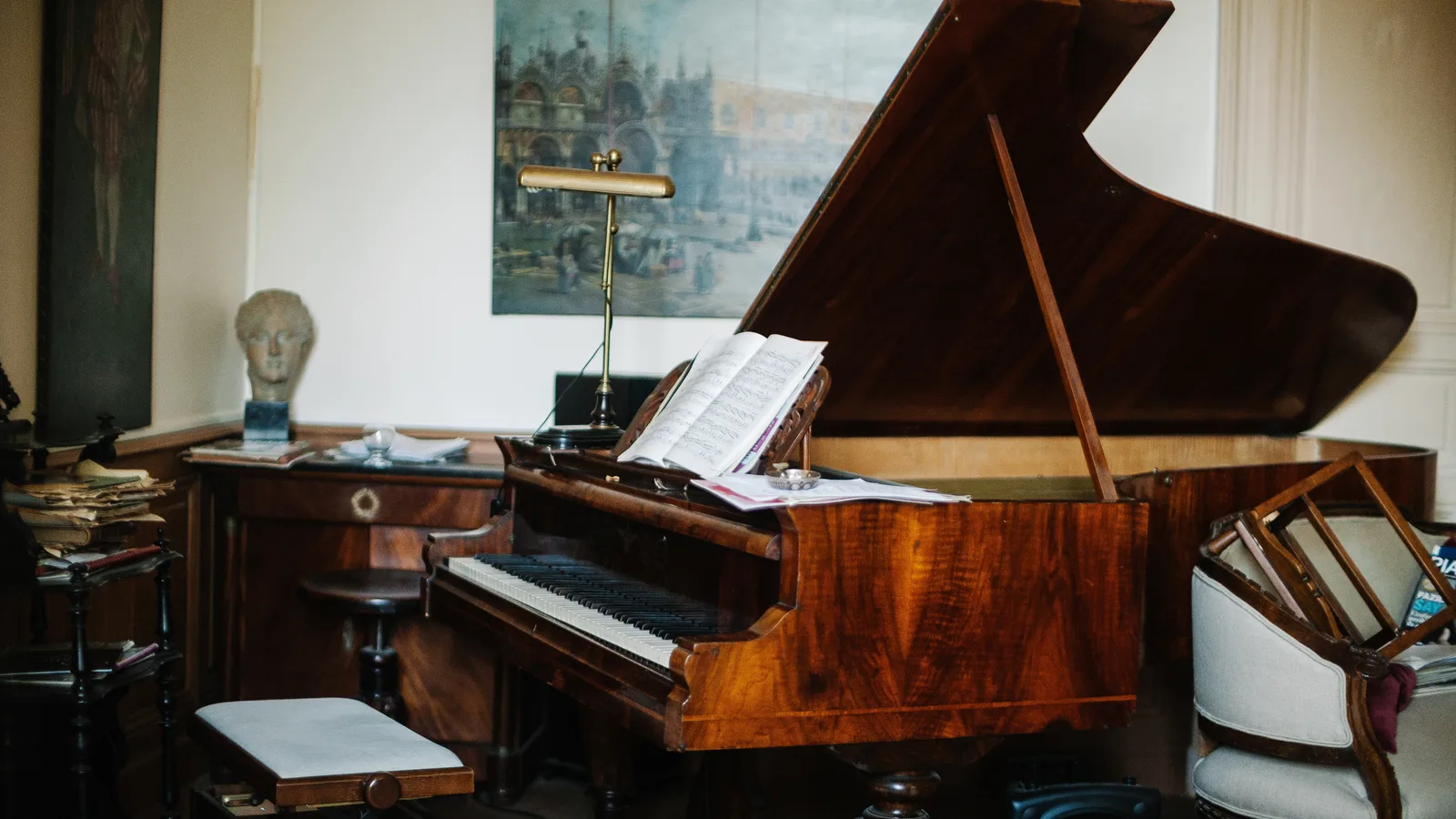
The detail most likely to come up at dinner is the piano. The Flagler Museum Music Series lists a December 16 concert with flutist Emi Ferguson and pianist Peter Dugan in Whitehall's Music Room, played on a historic Steinway that was originally ordered for the Hotel Royal Poinciana. The museum says it was one of a pair of twin instruments and is being restored specifically for that evening.
That matters on this island. The Hotel Royal Poinciana was the building that made Palm Beach a resort, and the museum's own archives describe it as having been the largest wooden structure in the world. Hearing something that was made for it is a rare thing. The program is built around the musical traffic between France and the United States around the Paris Exposition of 1889 and the Chicago fair of 1893, so the concert is designed as a companion to the exhibition rather than a separate night out.
The 2026 to 2027 Music Series runs five concerts. Each starts with a 5:30 p.m. reception, a 6 p.m. performance and a champagne toast with the musicians afterward. Tickets are listed at $95 with valet parking included, and members at the museum's top two levels attend free. The opener on November 11 brings the Israeli Chamber Project to the Palm Court with a program tied to Whitehall's years as a hotel. Later in the season, members of The Cleveland Orchestra play on February 28, a pianist leads the audience room to room between Whitehall's 1902 and 1908 Steinways on March 23, and the April 13 finale puts the house's original Odell pipe organ, all 1,249 pipes of it, back to work.
Three Wednesday nights of lectures
The exhibition also has a lecture series, each with cocktails at 5:30 p.m. and the talk at 6 p.m.
On November 18, PBS host and Chicago historian Geoffrey Baer walks the audience through the vanished fairgrounds and how they shaped the City Beautiful movement, including the fair's more familiar leftovers such as the Ferris wheel. On December 9, Gerald Larson, a professor emeritus of architecture at the University of Cincinnati, takes on the road not taken: John Wellborn Root, Burnham's partner, had a more colorful and varied plan for the fair before his death in 1891, and Larson asks what American cities might look like had it survived. On January 19, 2027, London design critic Alice Rawsthorn closes the series by connecting the fair's vision of the future to the changes happening in design now.
Then the Gilded Age goes floral
The fall show overlaps with the museum's holiday season, which leans hard into the era this year. From December 18 to 27, Fleurs de Villes fills the house with 15 mannequins dressed in thousands of fresh flowers, each inspired by HBO's The Gilded Age. Evening holiday tours of the first floor run December 18 to 23 and again on the 26th and 27th, with departures between 6 and 7 p.m., carolers and refreshments on the front portico. Those are $65 for adults and $35 for children. Members also get the lighting of the 16-foot Grand Hall tree on December 6, with Flagler's youngest descendants doing the honors.
Looking further out, the museum has already named its spring 2027 exhibition, Gilded Age Jewelry: The Making of Modern Luxury, on view February 18 to May 2, 2027, with more than 150 objects including tiaras and loans from Boucheron, Cartier, Tiffany and The Metropolitan Museum of Art. Together the two shows make a full season about how Americans of Flagler's era learned to stage wealth and taste.
If you go
The Flagler Museum is at One Whitehall Way in Palm Beach. Per its visitor page, hours are 10 a.m. to 5 p.m. Tuesday through Saturday and noon to 5 p.m. on Sunday, closed Mondays. General admission is $28 for adults, $14 for children 6 to 12, and free for children 5 and under and for members. Free docent tours of the first floor leave at 11 a.m., 12:30 p.m. and 2 p.m. Tuesday through Saturday, and at 12:30 and 2 p.m. on Sundays. Leave the backpack in the car: bags of any size in that style are not allowed inside.
For residents who have walked through Whitehall once on a visiting relative's tour and never gone back, this is the season to return. The house has not changed. The way you will read it after this exhibition probably will.
Loading comments…